 Racespot
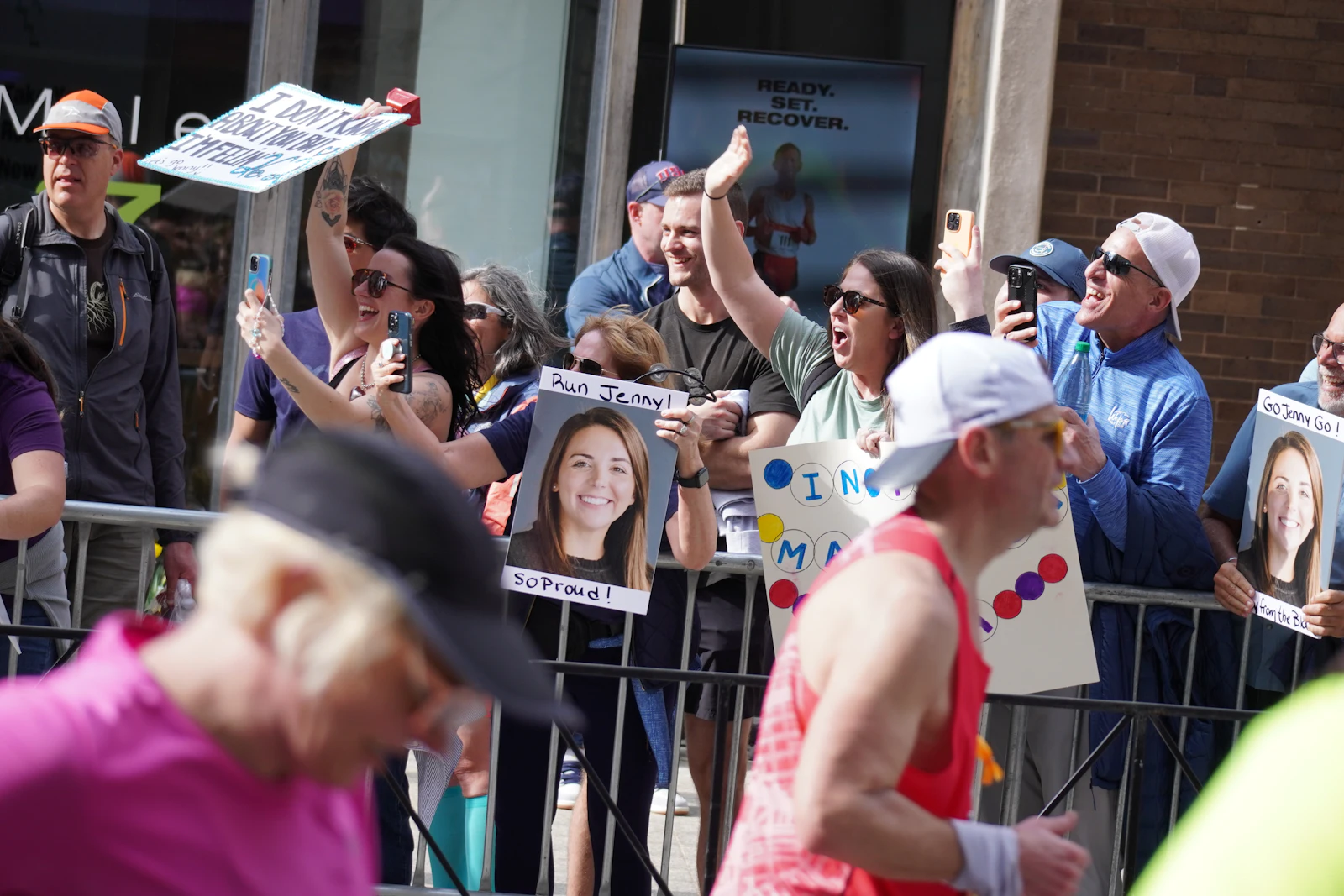
A few seconds. That’s usually how long it takes for your runner to pass your spot. You may have spent an hour on the train for it, so you want those seconds to count: you seeing your runner, and above all your runner seeing you. With a little preparation that almost always works.
Pick your spots beforehand
Look at the course together with your runner and agree on two or three spots. A few things to look out for:
- Where your runner needs you most. The last third of a race is the hardest. In a marathon, anything after kilometre 30 is worth its weight in gold; in a half marathon, the last five kilometres.
- Where it’s not the busiest. Most people stand at the start and the finish. A quiet stretch a few hundred metres further on gives you both a better chance of seeing each other.
- Where your runner can see you coming from far away. A long straight road works better than just after a bend. Your runner then has time to look for you.
Also check how you get from one spot to the next, and work out roughly when your runner will pass. How to do that is in When will your runner pass?
Agree on a side
This is the most important tip, and the easiest. Agree which side of the road you’ll stand on, seen in the running direction. Then your runner only has to look one way. Anyone scanning both sides halfway through a race will miss you anyway.
Agree on a side of the road. Then your runner only has to look one way.
Stand out
Among thousands of people at the roadside, you’re one face. Give your runner a hand:
- A bright colour your runner knows about beforehand, or something above the crowd, like a balloon or a sign.
- A sign with your runner’s name, big and bold. Runners spot their own name from further away than you’d think.
- Stand up high on a kerb or a step, where that’s allowed.
What do you shout?
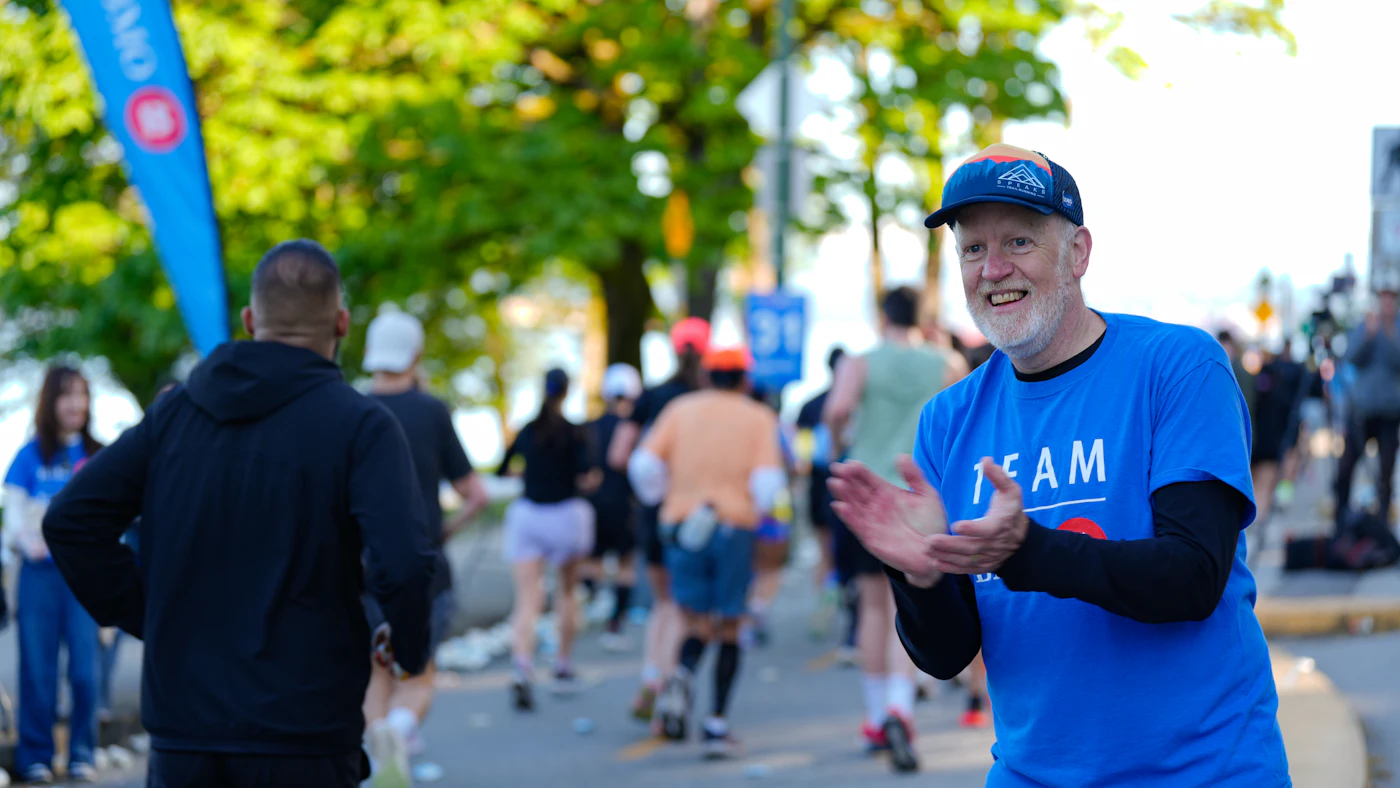
Shout your runner’s name, and shout early: as soon as you see them, not once they’re next to you. After that, something specific helps more than something general. “You look strong” or “you’re right on schedule” works better than “go go go”.
Careful with “you’re nearly there”. At kilometre 25 of a marathon it isn’t true, and your runner knows it. Save it for the last kilometre.
Between two spots
A race turns the city into a puzzle: roads are closed and you can’t cross the course just anywhere. Only cross where it’s allowed, and never step onto the course, not even for a moment. A bike is often faster than public transport, especially when you have to go around the route. Plan generously: if you reach your next spot at the same time as your runner, you’re too late.
If you can’t be there
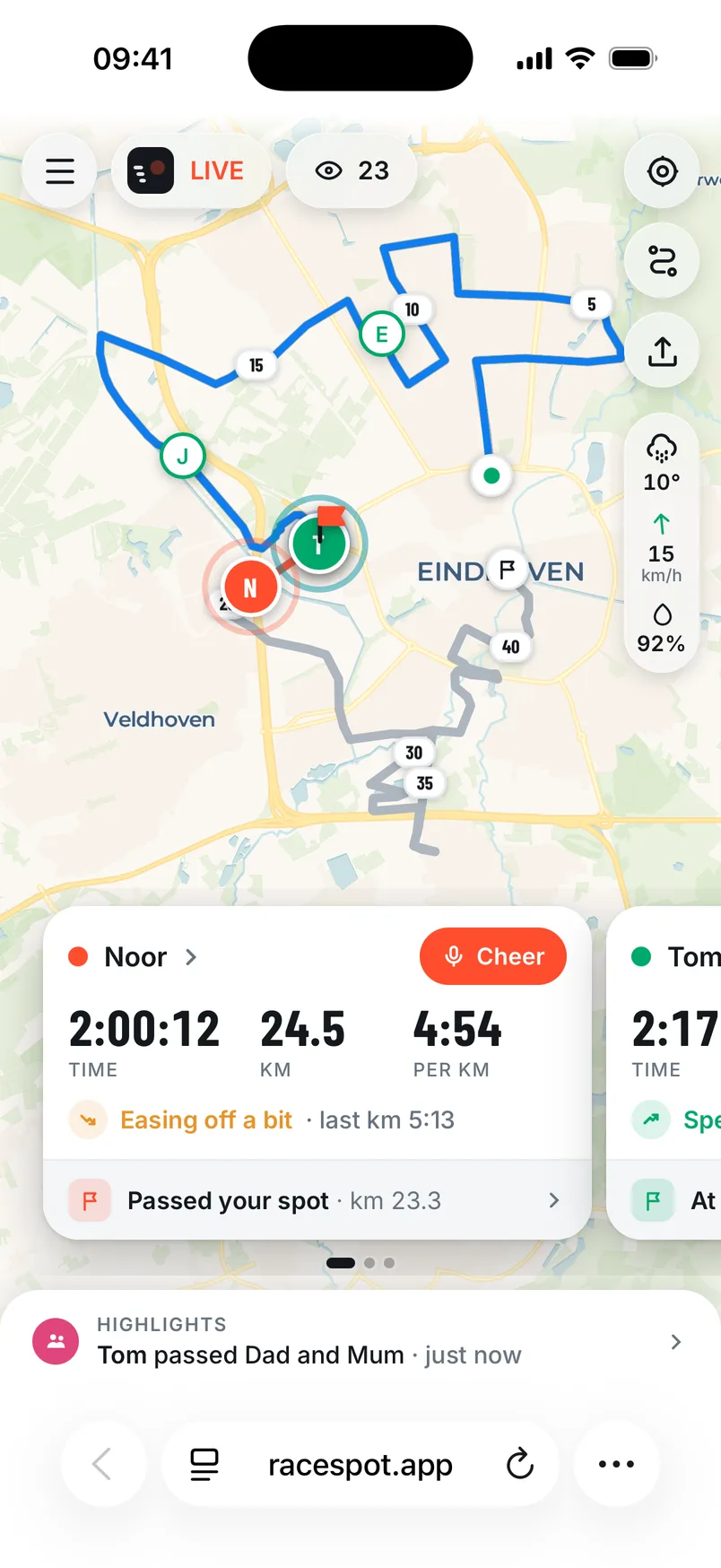
Not everyone can stand at the roadside. With Racespot you can follow from home and record a cheer your runner hears in their earbuds along the way, at the kilometre you choose. And if you are along the route, share your spot and the side of the road: your runner then hears you’re coming up, for example “in 300 metres Mum is on the right”.
At the Amsterdam Marathon we saw how overloaded the network can get at the start. So share your link and agree on your spots the evening before, not on the morning itself.