 Racespot
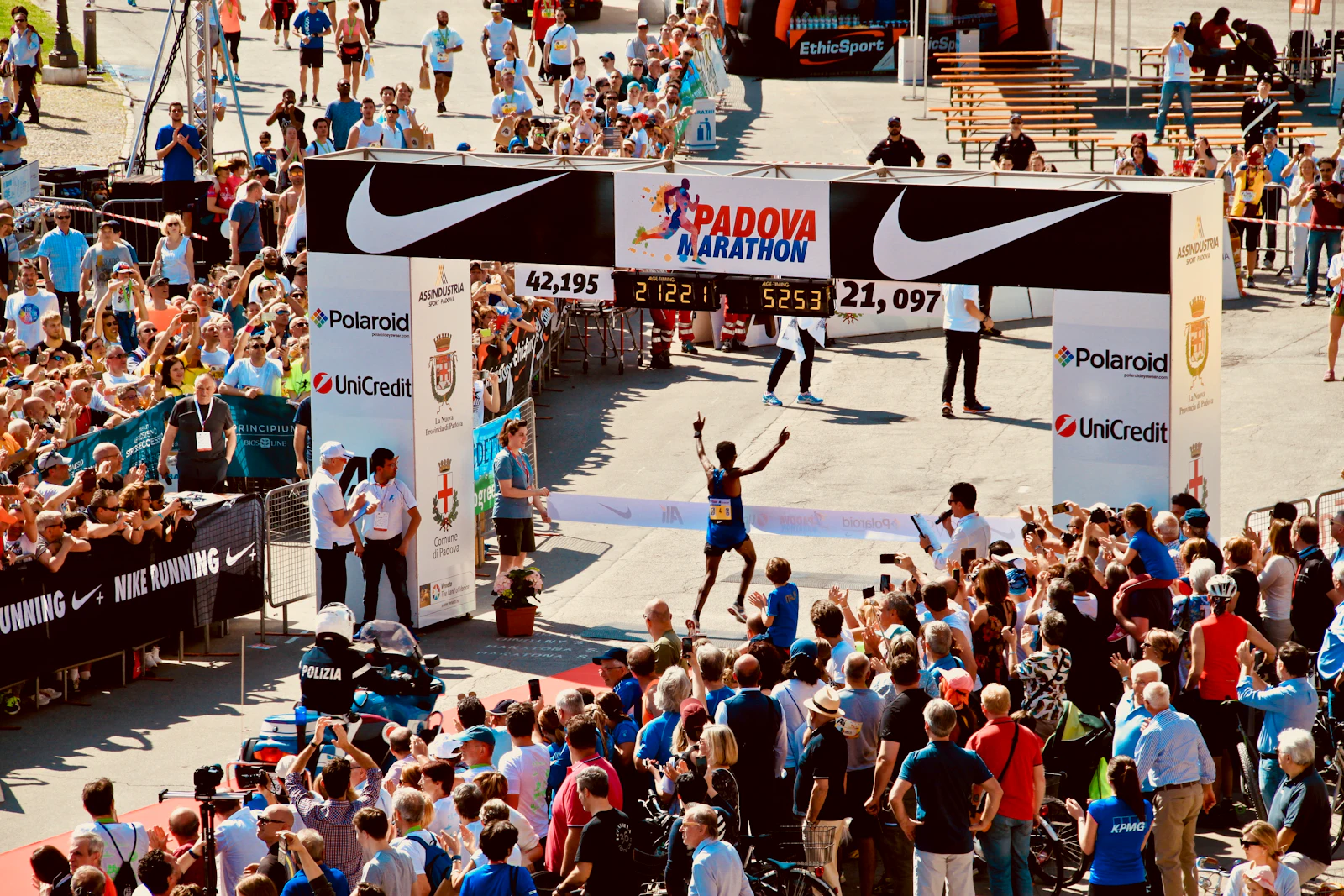
After the finish you glance at your watch: 21.6 km. The results say 21.1 km, with a time that’s slightly different from the one on your wrist. Nobody made a mistake. The chip in your bib and the GPS in your phone or watch simply measure different things.
Two ways of measuring
The chip sits in or on your bib. At the start, the finish and often every few kilometres there’s a timing mat. When you cross it, your time is recorded. So the chip knows very precisely when you were at a known spot, but nothing about what you did in between.
GPS checks satellites a few times per second and works out where you are. All those points in a row form your route, and the distance is the length of that line. So GPS knows where you are all the time, but every point has a small margin of error.
Why GPS measures longer
The distance on your watch is nearly always longer, for three reasons.
- The course is measured along the shortest line. Officially measured races are measured along the shortest possible route: inside of every bend, straight lines from corner to corner. A small margin is added on purpose, so the course is never short. An official 10 km is therefore 10.01 km.
- Nobody runs that shortest line. You weave around other runners, take a drinks station on the outside, or stick to your side of the road. Every small detour adds up.
- GPS has a margin of error. Between tall buildings, under bridges and in tunnels the signal bounces or drops for a moment. A few metres off the real spot, again and again, makes the line longer and more jagged than the one you ran.
We saw how big the difference can be ourselves at the Eindhoven half marathon: the measured GPS distance was about 3.5% longer than the course. On a half marathon that’s over 700 metres.
Gun time, net time and your time
Results often show two times.
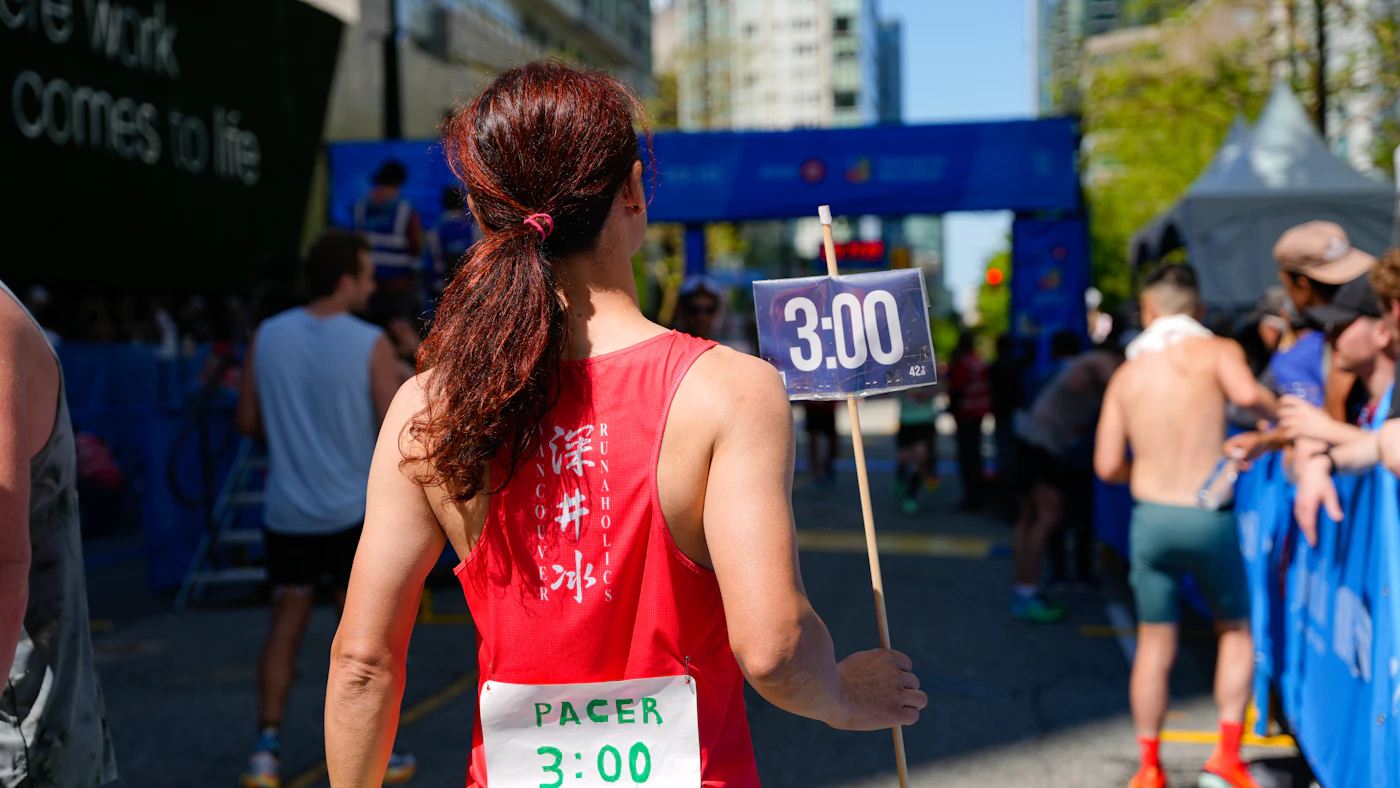
- Gun time runs from the starting signal until you cross the finish. If you start far back, the time it took you to reach the start line is included.
- Net time (or chip time) runs from the moment you cross the start mat until the finish. That’s the time you actually ran, and the one most runners think of as their time.
Your watch is usually close to that, but not exact: you press start a few seconds before or after the mat, and stop a few seconds after the finish.
When GPS says your runner is at 30 km, the 30 km sign is often still a little way ahead.
What this means for supporters
If you follow through the official race app, you see times at the mats. Between the mats the position is an estimate. If you follow through GPS, you see where your runner really is, but the distance can come out a little higher than the kilometre signs.
Worth knowing: the kilometre signs along the road belong to the official course. When your runner reaches 30 km by GPS distance, they may still be a few hundred metres before the 30 km sign in reality.
How Racespot deals with it
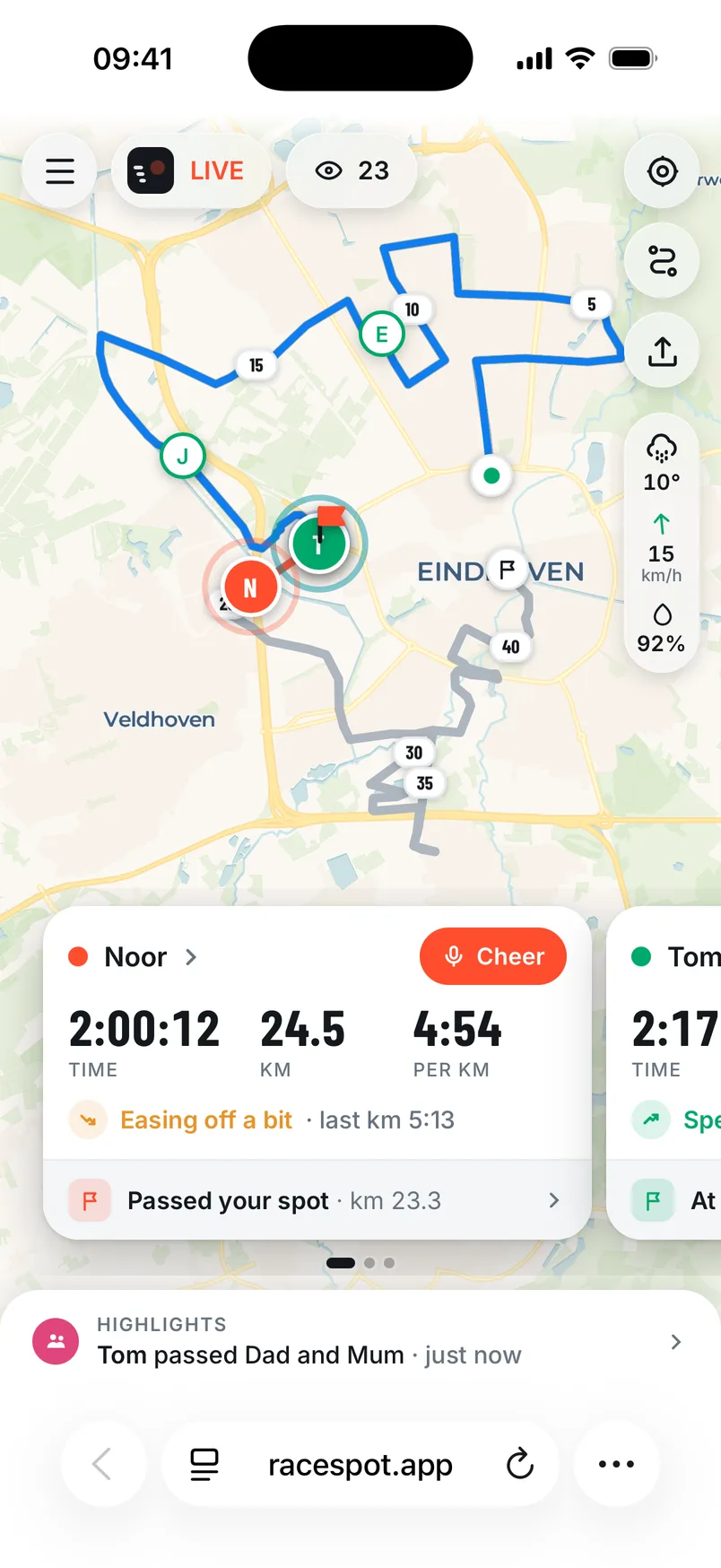
Racespot uses GPS, but works out your position on the course itself: not how many metres your phone has added up, but where on the route you are. That way, for example, the announcement “Mum is 300 metres ahead” matches the real distance to that spot, not the added-up GPS distance, which can drift quite a bit after a few hours.
For the official time the chip remains the source. So use Racespot alongside the race’s app or results, not instead of them.