 Racespot
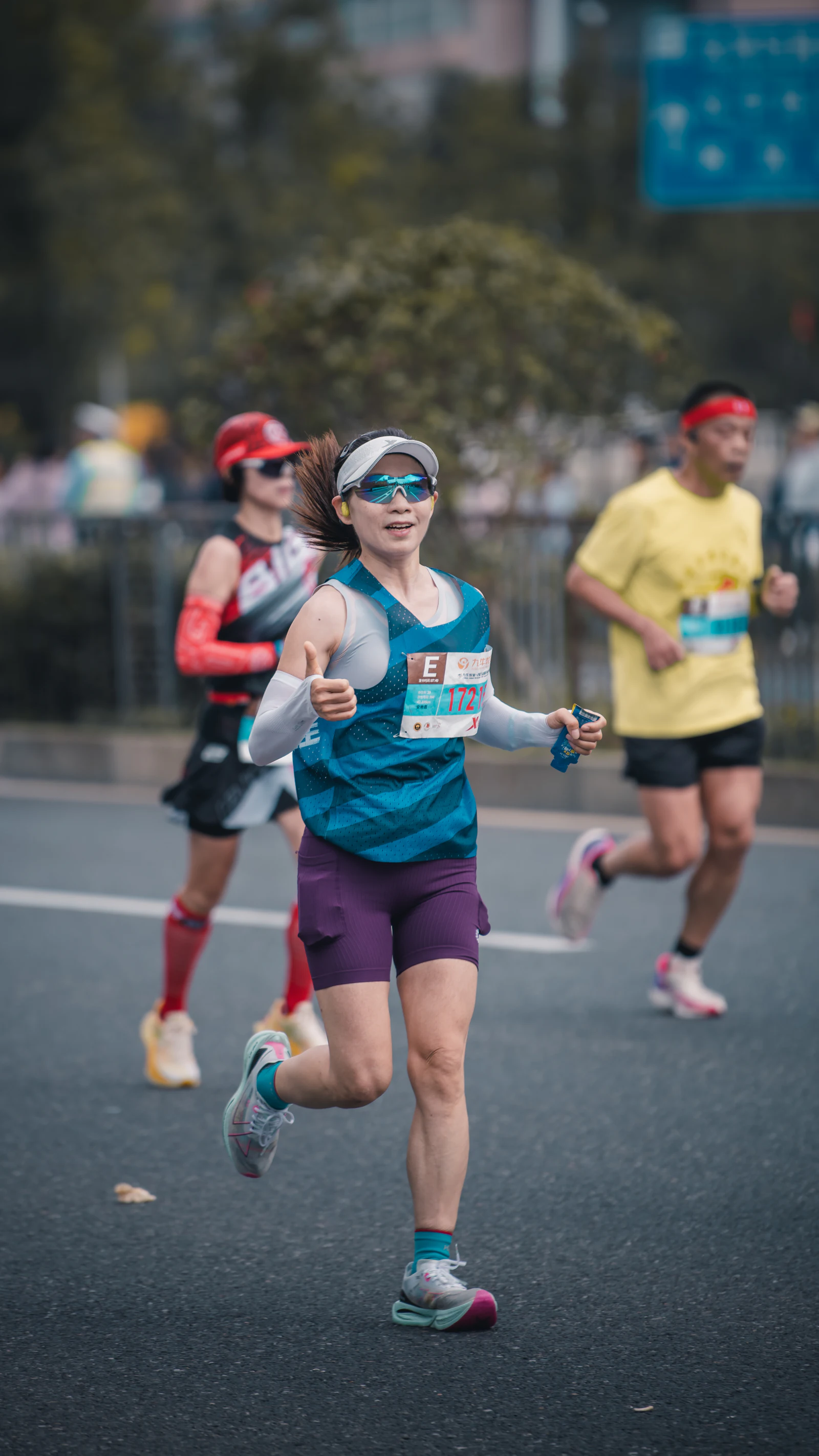
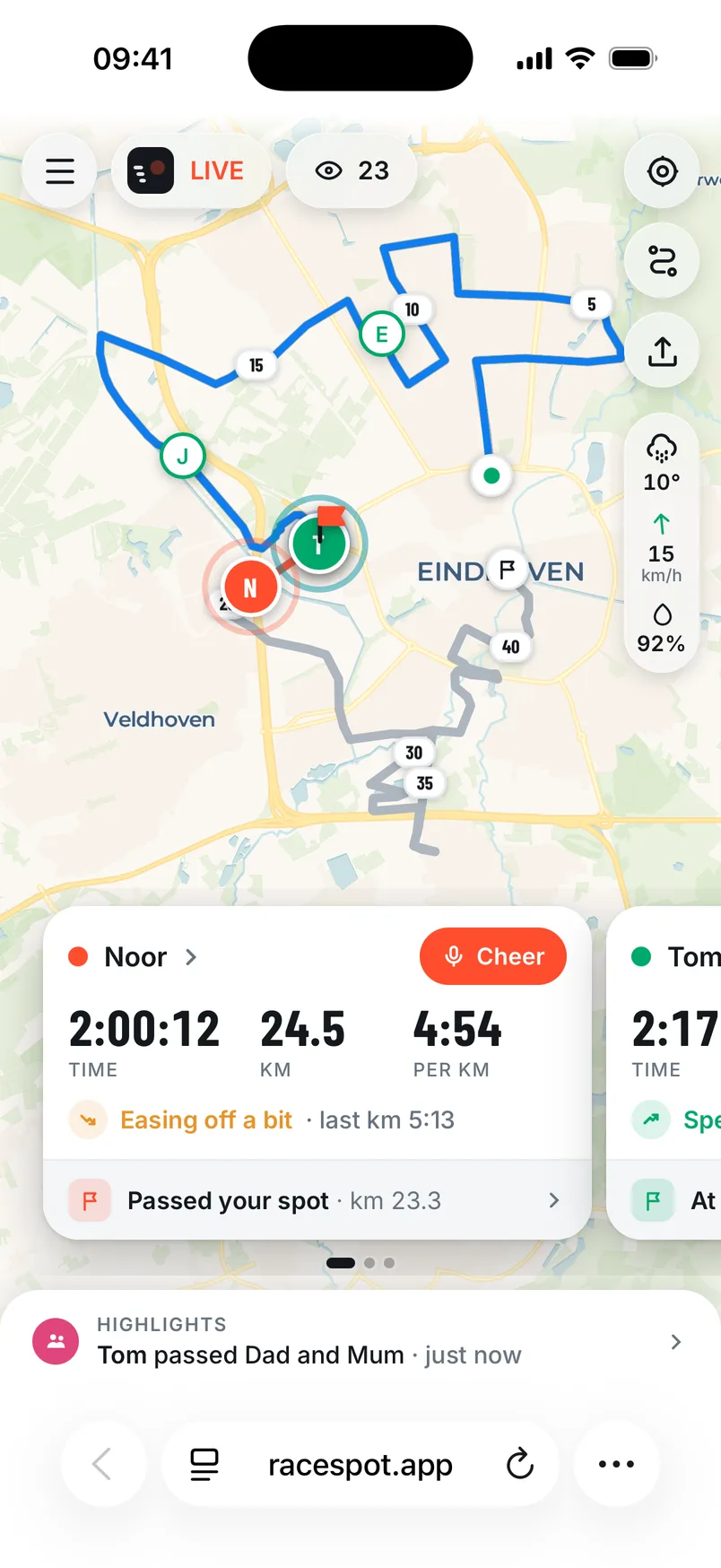
In the middle of a race it goes quiet in your head. The music keeps playing, the legs get heavy, and then suddenly you hear a voice you know. A recorded cheer is short, but at the right moment it does more than a whole street full of spectators. Here’s how to get the most out of it.
Why it works
At the roadside hundreds of people shout at once. A cheer in the earbuds is just for your runner, in a voice they recognise, at a moment you picked. That makes it personal. So it’s worth thinking about for a minute.
Pick the moment
In Racespot you choose when your runner hears your cheer: right away, at a kilometre, or just before the spot where you’re standing. A few rules of thumb:
- Not at the start. In the first kilometres your runner has energy to spare, and it’s busy and loud. Save your cheer.
- Where it gets hard. In a marathon that’s often between kilometre 30 and 35, in a half marathon around kilometre 15 to 18. That’s where a familiar voice counts most.
- Just before your spot. If you’re along the route, have it play just before. Your runner then knows you’re coming up, and starts looking for you.
The best cheer arrives at the moment it starts to hurt.
How to build it
Fifteen seconds is shorter than you think. A structure that almost always works:
- Start with their name. Your runner already hears who it’s from, but their own name grabs attention.
- Say something personal. A memory from training, a joke only the two of you get, or simply that you’re proud.
- End looking forward. Something your runner can take with them: “hang in there, I’ll be at the finish”.
Better not
- No comments on the pace. You don’t know how your runner feels, and a remark about too slow or too fast rarely lands well mid-race.
- “You’re nearly there” at kilometre 25. It isn’t true, and your runner knows it.
- A long story. After fifteen seconds the recording stops. Say one thing well rather than three things halfway.
- A noisy place to record. Wind and traffic make your voice hard to hear, especially with music underneath.
Examples
Adapt them to your own words, that’s when they work best.
| Moment | Example |
|---|---|
| Halfway | “Sanne, halfway! You’re running exactly like we practised. Just keep going like this.” |
| Kilometre 32 | “Hey Tom, this is where your own race starts. All those Sunday mornings, this is what they were for. I’m proud of you.” |
| Just before your spot | “Mum here! I’m just ahead on the right, with the yellow sign. Look right!” |
| Last kilometre | “One more kilometre, Noor. This one’s for you. See you at the finish!” |
Recording
Find a quiet corner, hold the phone at arm’s length and speak a little slower than usual. Listen back once before you send it. After the race your cheer is kept with your runner’s race, with the text alongside. Then your runner hears it once more, usually with very different ears.
A cheer is announced first with your name, for example “Cheer from Mum”. The music dips for a moment and then carries on. So your runner doesn’t have to do a thing.