 Racespot
If you live with a runner, the weeks before a marathon come with a new language. Start pen, negative split, hitting the wall. Below are the words you hear most, in plain language, with what they mean for you as a supporter.
Before the start
Bib. The number on your runner’s chest. It usually has a chip in or on it, and often their name. Handy tip: don’t look for your runner’s face, look for the colour of their top, and shout the name printed on the bib.
Chip. A small transmitter in or on the bib. Every time your runner crosses a timing mat, the time is recorded. That’s where the official results come from.
Start pen. At big races runners start in groups, sorted by expected finish time. The fastest pens go first. For you it means: your runner may only start quite a while after the starting gun.
Starting gun. The official start of the race. The time counted from here is called gun time.
Cut-off time. The time within which runners have to finish. After that roads reopen, and sometimes a sweep vehicle follows the last runners.
Along the way
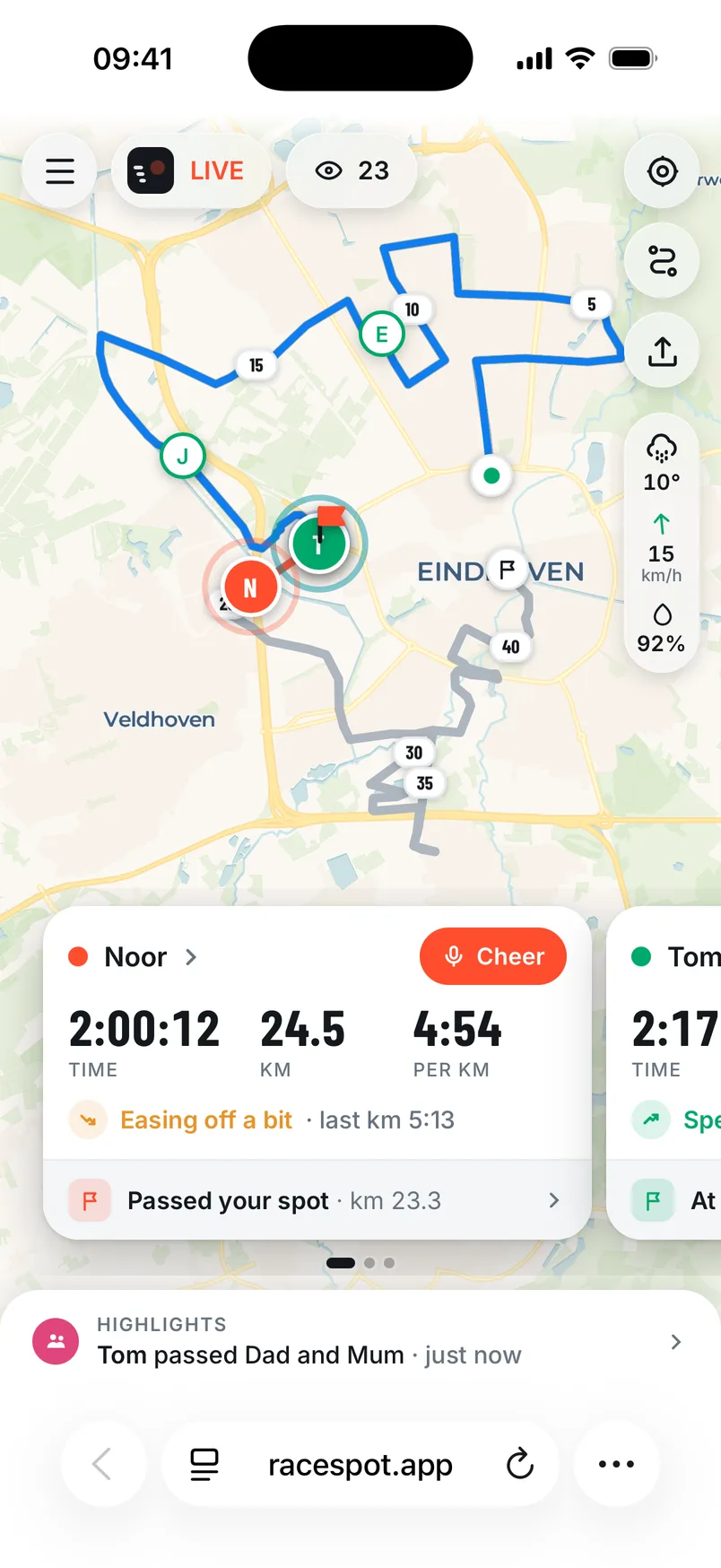
Timing mat. A mat across the road, often every 5 kilometres, that reads the chips. The official race app shows split times as soon as your runner has crossed it. In between, the position is an estimate.
Split. The time over a part of the race, for example per 5 kilometres or per half. A negative split means the second half was faster than the first. That’s impressive, and worth saying so.
Pacer. A runner who keeps a steady pace towards a finish time, often with a flag or balloon showing that time. Runners aiming for that time run with the pacer. If you see the pacer for your runner’s goal go past, your runner should be close.
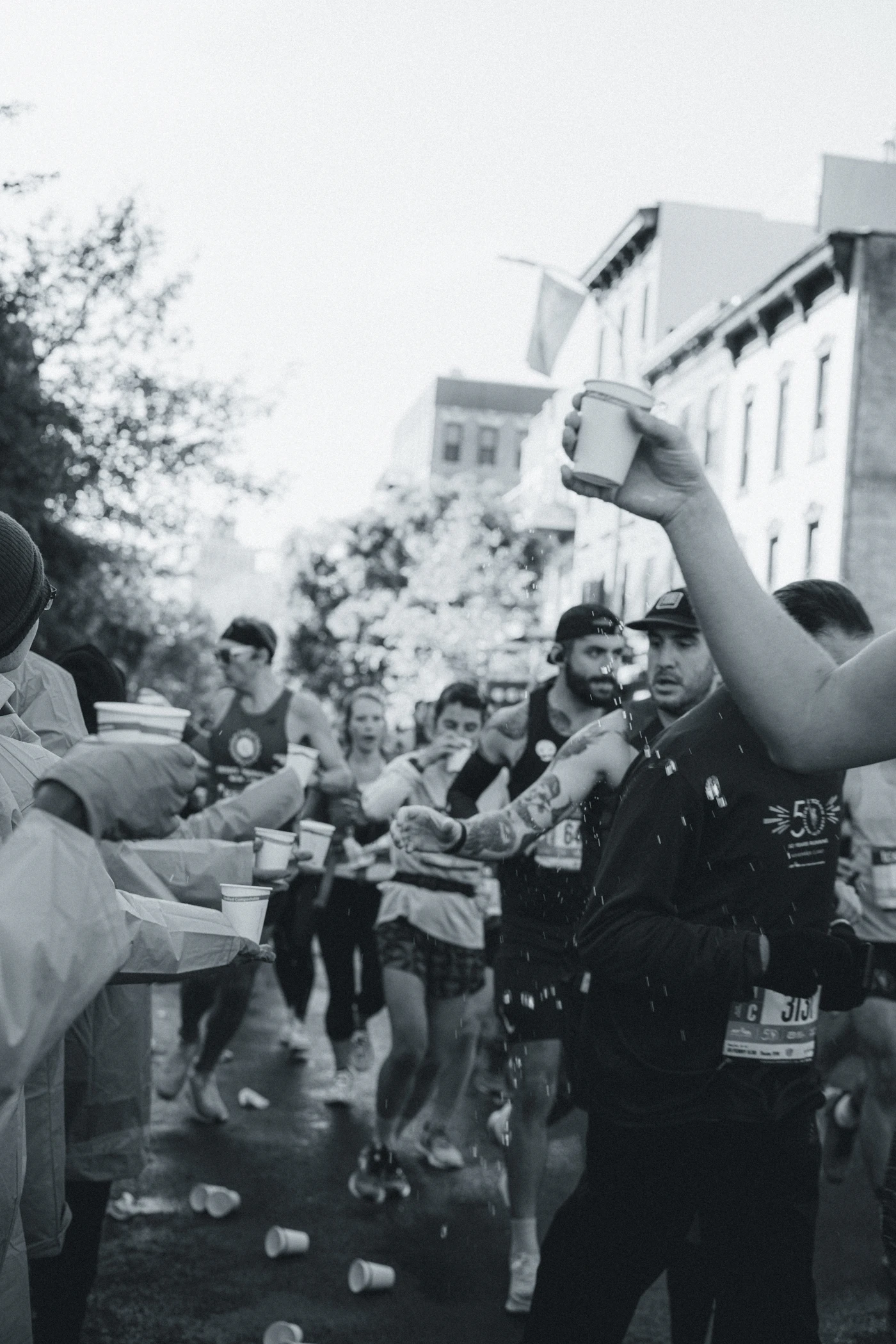
Drinks station. A spot along the route with water, sports drink and sometimes food. It’s busy and slippery with cups: not a good place to stand if you want to see your runner.
Hitting the wall. The moment the energy seems to run out all at once, in a marathon often somewhere after kilometre 30. Legs get heavy, the pace drops. That’s exactly where a supporter makes the difference.
After kilometre 30 a different race begins for many runners. That's the best place for you.
Distance on the watch. Almost always a bit more than the official distance, because nobody runs the shortest line and GPS has a margin of error. More in Chip time or GPS.
After the finish
Gun time. From the starting gun to the finish.
Net time or chip time. From the start mat to the finish. This is the time your runner actually ran, and usually the one that counts for a record.
PB. Personal best: the fastest time your runner has ever run over this distance. Ask about it, but only once they’ve got their breath back.
Finish area. The fenced-off stretch after the finish where runners get a medal, water and often a foil blanket. Supporters usually aren’t allowed in. So agree beforehand on a spot where you’ll meet afterwards.